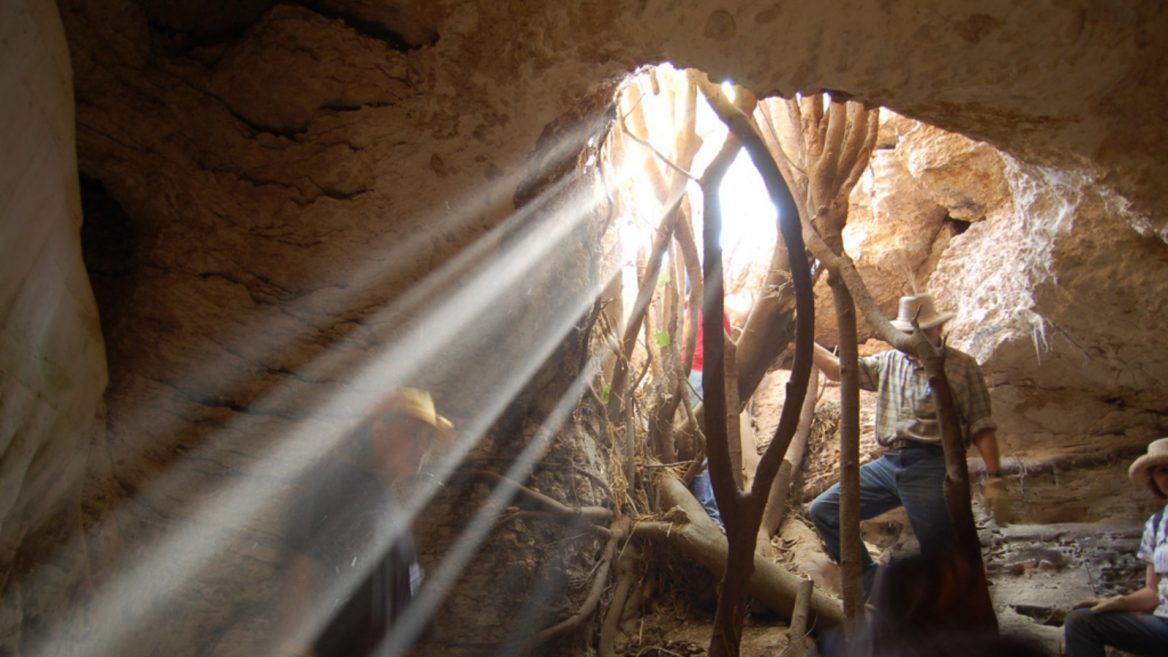
Beit Lehi-Beit Loya: Unearthing 2,600 Years of History
A vanished village buried for centuries is gradually emerging in the cave-dotted lowlands southwest of Jerusalem. In true Israeli fashion, uncovering Beit Lehi-Beit Loya combines meticulous manual labor with cutting-edge technology.



Project leaders are now sharing their discoveries online in 3D, enhanced by virtual reality, allowing the public to explore the ancient site remotely.
Ancient Roots and Rediscovery
First settled by Jews in the late sixth century BCE, the site was later abandoned and rebuilt by successive populations of pagans, Jews, Christians, and Muslims through the 13th or 14th century CE.
The site was initially discovered in 1899 by R.A.S. Macalister for the Palestine Exploration Fund, but remained largely unexplored until the 1980s. Hebrew University archaeologist Yoram Tsafrir uncovered a Byzantine church with intact mosaic floors, funded by donors in Utah.
After Tsafrir shifted his focus to the Roman ruins at Beit She’an, the site remained dormant until 2005, when his former student Oren Gutfeld, now director of the Salvage Excavation Program at Hebrew University’s Institute of Archaeology, resumed excavations.
Gutfeld’s work is sponsored by the Beit Lehi Foundation in Utah and assisted annually by faculty and students from Utah Valley University, led by professors Darin Taylor and Michael Harper.
The Meaning of Beit Lehi-Beit Loya
“Beit Lehi” means “house of the jawbone,” possibly referring to the biblical site where Samson slew a thousand Philistines with a donkey’s jawbone. The Church of Latter-Day Saints believes this was the home of an Iron Age prophet named Lehi mentioned in the Book of Mormon.
The Israeli name, Beit Loya, refers to a type of ornamental design found at the site.
Advanced Technology Reveals the Past
Although less than 20 percent of the village has been excavated due to restrictions near a military firing range, the discoveries have been remarkable.
Key Findings
One of the earliest mosques in Israel, from the 9th century CE
Seven dovecotes, two containing over 1,100 niches each
Eight oil presses
An underground stable and water system
Quarries and a Hellenistic-period dwelling with a watchtower
Three ritual baths decorated with graffiti, including the seven-branched menorah
LiDAR scans, 360-degree cameras, and a drone-mounted 4K camera revealed many layers of settlement spanning 2,600 years.
Mosaic Floors and Byzantine Churches
Tsafrir’s 1980s excavation uncovered Byzantine church mosaics, many still intact. These intricate floors provide valuable insights into the religious and artistic life of the region during that period.
Historical Inscriptions
Even before modern excavations, the region was known for its rich history. In 1961, scholars from Hebrew University identified seven sixth-century BCE Hebrew inscriptions in burial caves, including the oldest inscription mentioning Jerusalem and the four-letter biblical name of God.
Gutfeld’s team has since uncovered over 50 inscriptions throughout the site in ancient Hebrew, Greek, and Arabic, providing a deeper understanding of the site’s long and complex history.
Drone Discovery: A Hellenistic Palace or Temple
Using images from a UVU drone-mounted 4K camera, researchers surveyed a 36-square-kilometer area around the excavation site.
Key Discovery
A monumental building 1.5 kilometers north of Beit Loya, likely a Hellenistic-period palace or temple from the late 3rd or 2nd century BCE
A room containing delicate pottery and two incense burners, one with a carved bull image at the temple entrance
Artifacts display pagan or Idumean stylistic features, offering rare insight into local artistic traditions
No cultic artifacts have been found within Beit Lehi-Beit Loya itself, suggesting worship may have taken place on the neighboring hill.
Public Access and 3D Online Magazine
In 2009, Gutfeld and Michal Haber co-wrote a site guide, which was later digitized by Utah Valley University students into a 3D online magazine. This e-zine allows the public to explore the site virtually and will be updated annually with discoveries.
Ongoing Excavations
The Beit Lehi Regional Project, launched in 2017, continues excavating and studying the site in collaboration with Israel Antiquities Authority archaeologists Michal Haber and Pablo Betzer, assisted by university students and local volunteers.
With each excavation season, new layers of Beit Lehi-Beit Loya’s 2,600-year history emerge, combining traditional archaeology with cutting-edge digital visualization to bring the ancient village to life.
New York Jewish Travel Guide