Israeli Company 2BFresh Brings Microgreens to the World – Even Buckingham Palace Is Onboard



Israeli company 2BFresh is exporting ready-to-use microgreens to North America, Europe, and Asia – and they’re not just for garnishing plates. Even Buckingham Palace is getting in on the act.
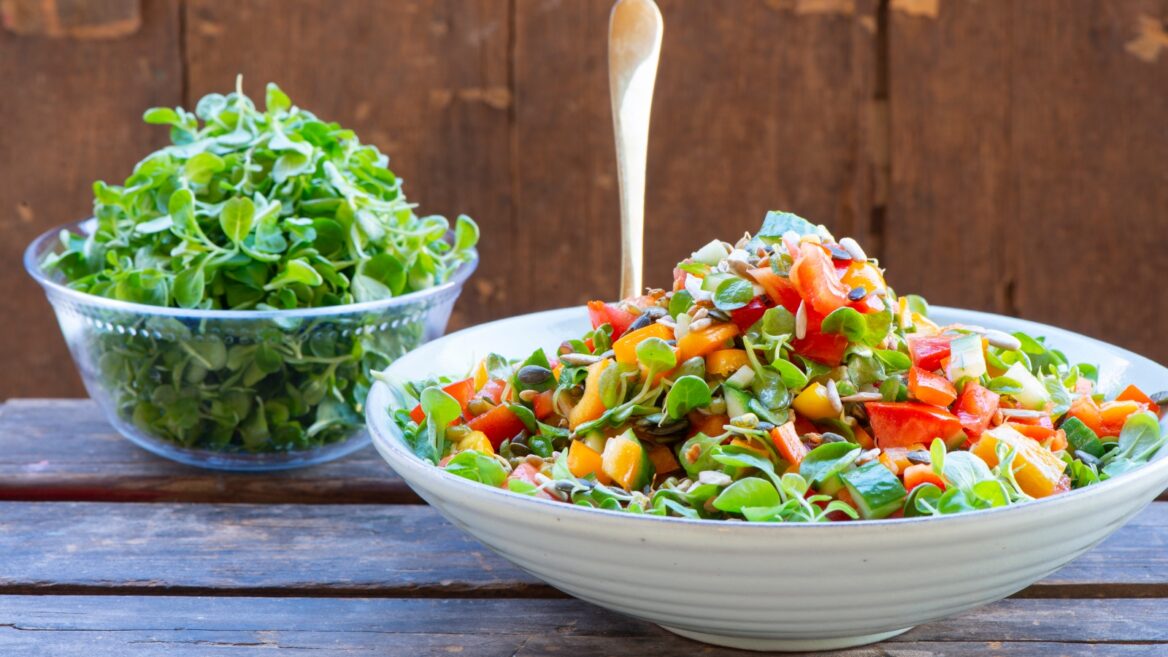
Microgreens, harvested just seven to 20 days after seedlings emerge, pack more flavor and nutrients per gram than mature plants. For example, broccoli micro-leaves contain three times more Vitamin K1 than fully grown broccoli. It’s no surprise that consumers, not just professional chefs, are adding these tiny greens to salads, sandwiches, and soups.
“We export to Western and Eastern Europe, Russia, Hong Kong, Singapore, the US, and Canada,” says Yael Mandel, international sales manager for 2BFresh. “England, France, and Poland are among our biggest markets.”
An offshoot of the 61-year-old Teshuva Agricultural Projects (TAP), 2BFresh produced 85 tons of microgreens in 2019, plus 45 tons of sunflower shoots for domestic and overseas markets. Its 32 varieties range from amaranth to thyme, including exotic options like Sakura purple radish, green Pac Choi, red vein sorrel, and pea shoots.
Ready-to-Use, Year-Round Freshness
Unlike competitors who ship microgreens as plants that need cutting, 2BFresh delivers fully packaged, ready-to-use leaves. This approach is more convenient and reduces the carbon footprint.
The company maintains year-round production in Israel through strategically located greenhouses: one in Olesh in the Sharon plains and two in the Arava desert near the Jordanian border. Additional greenhouses in Switzerland, Poland, and Cyprus help serve overseas markets, with Switzerland’s Coop supermarket chain carrying products in over 350 stores.
Sustainable, Pesticide-Free, and Nutrient-Dense
2BFresh applies sustainable growing techniques developed by TAP, with precise harvesting protocols to ensure maximum freshness and a shelf life averaging 10 days. The leaves are grown in soil-less substrates, free from fertilizers and pesticides, and remain untouched by pests due to their young age.
Nutritional expert Uri Mayer-Chissick, Ph.D., notes that microgreens can be up to nine times richer in minerals than mature vegetables and are excellent sources of vitamins K1, C, E, and carotenoids. They’re also more ecologically efficient, growing up to 90% faster than mature vegetables while using far less water.
Mandel says the goal is to make microgreens accessible beyond gourmet kitchens, integrating them into everyday diets as a tasty, healthy, and sustainable food option.
NYJTG