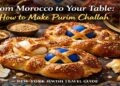
In the vibrant kitchens of Moroccan Jewish families, Purim comes alive with the sweet aroma of a unique and symbolic bread. Unlike the triangular hamantaschen of Ashkenazi tradition, Moroccan Jews celebrate the festival with a special challah, known as Ojos de Haman— “Eyes of Haman”—or Boyoja Ungola di Purim. This festive bread, wrapped around hard-boiled eggs, is not just a treat for the table but a vivid story baked into dough, telling of courage, survival, and the defeat of Haman, the villain of the Purim story.



The bread is a feast for the eyes as well as the palate. Each sweet loaf, studded with nuts, seeds, and spices, is shaped to cradle hard-boiled eggs in its center—the eggs representing Haman’s eyes. During the Purim meal, the eggs are torn from the bread, symbolically tearing out Haman’s eyes, a tradition passed down through generations. In Moroccan Jewish households, these breads can appear in many forms: braided, ball-shaped, or oval loaves, with one or two eggs tucked inside, each variation carrying its own familial touch.
Ingredients for Moroccan Purim Challah
Dough:
- 1½ cups warm water
- 2 tsp active dry yeast
- 2 tbsp sugar
- ½ cup vegetable oil
- 1 tsp salt
- 4–5 cups flour (adjust as needed)
Eggs:
- 4–6 hard-boiled eggs, cooled and dried
Topping:
- 1 egg, beaten (for egg wash)
- Sesame seeds or fennel seeds
- Optional: slivered almonds for extra texture
Optional Decoration:
- Colored eggs (blue or red)
- Scissors to create “petals” or “beard” effect around loaves

Preparation Steps
- Prepare the Dough
In a medium bowl, dissolve the yeast and sugar in ½ cup of warm water. Let it sit for 15 minutes until frothy. Add eggs, honey, oil, salt, remaining water, and half of the flour. Mix until a loose batter forms. Fold in fennel seeds, sesame seeds, and almonds. Gradually add the remaining flour until the dough is soft but not sticky. Knead for a few minutes by hand or with a mixer. Cover and let rise in a warm place for 1–1½ hours, until doubled in size.
- Boil and Prepare the Eggs
While the dough rises, boil your eggs until hard, cool them, and dry them thoroughly.
- Shape the Bread
- Tip the dough onto a floured surface and let it rest for 10 minutes.
- Separate a small piece of dough to roll into thin “X” strips for securing the eggs.
- Divide the remaining dough into two equal portions for two loaves. Shape each into an oval.
- Cut shallow slits for the eggs and nest one hard-boiled egg in each depression.
- Criss-cross the dough strips over the eggs, pressing ends into the loaf to secure.
- Optional: Snip around the loaf edges with scissors to create decorative “petals” or a textured border.
- Rise and Decorate
Place loaves on greased baking sheets, cover, and let rise for 30–40 minutes. Preheat the oven to 350–375°F (175–190°C). Brush loaves with egg wash and sprinkle with sesame or fennel seeds.
- Bake
Bake for 20–30 minutes, until golden on top and firm on the bottom. Remove from the oven and allow to cool slightly.
Tips for a Perfect Moroccan Purim Challah
- Custom Colors: Dye the eggs before baking to add a festive flair.
- Texture Variety: Sprinkle slivered almonds or seeds for extra crunch.
- Presentation: Serve with honey or preserves to highlight the sweet, aromatic flavors of this traditional Purim bread.
A Celebration in Every Loaf
Moroccan Purim challah is not just a festive treat—it’s a living tradition. Each golden loaf carries the stories, flavors, and memories of generations of Moroccan Jews, blending sweetness, symbolism, and ritual into every bite. Baking Ojos de Haman is a way to connect with history, celebrate resilience, and share joy with family and friends during Purim. As you tear the eggs from the bread, you’re not only honoring a centuries-old custom—you’re creating your own memories, keeping the spirit of Purim alive, and bringing a little taste of Morocco into your home.
Yields: 2 loaves
By Meyer Harroch | New York Jewish Travel Guide
Meyer Harroch is the Founder and Publisher of the New York Jewish Travel Guide, documenting Jewish heritage, life, and culture worldwide while promoting tourism and global destinations.