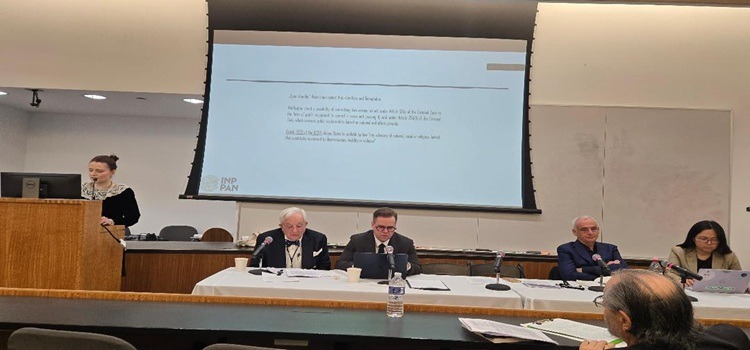
Cardozo School of Law hosted the Center for Law and Antisemitism’s 2026 Law and Antisemitism Conference on March 8–9, drawing a sold-out audience for two days of timely and pathbreaking discussion. Bringing together over 50 leading scholars from around the world, the interdisciplinary gathering tackled the legal, historical, and societal dimensions of antisemitism.



The conference featured more than 15 panels covering topics from the IHRA Working Definition of Antisemitism to international law, human rights, political violence, freedom of speech, antisemitism online, education, and empirical research. Panels explored new initiatives to combat Jew-hatred and offered comparative approaches for understanding and legislating against antisemitism globally.
Chairing the conference was Rona Kaufman, a law professor at Duquesne University, co-founder of the Center for Jewish Legal Studies, and a participant for the past two years. Reflecting on the event, Kaufman noted, “From my perspective, this is a brand-new conference. It was renamed this year from Law vs. Antisemitism to Law and Antisemitism, signaling a broader, more collaborative approach to these pressing issues.” The conference steering committee included distinguished professors Rob Katz, Ruthy Lowenstein, Andrea J. Martin, Seth Oranburg, Suzanne Stone, and Zalman Rothschild.
Panel topics spanned a wide range of critical issues, from litigation strategies presented by Mark Goldfeder, director of the National Jewish Advocacy Center, and Ken Marcus, chairman of the Brandeis Center, to discussions of the legal consequences of sexual violence perpetrated by Hamas on October 7.
Spotlight on Meng Yang: Antisemitism in China and in the Global Chinese Diaspora
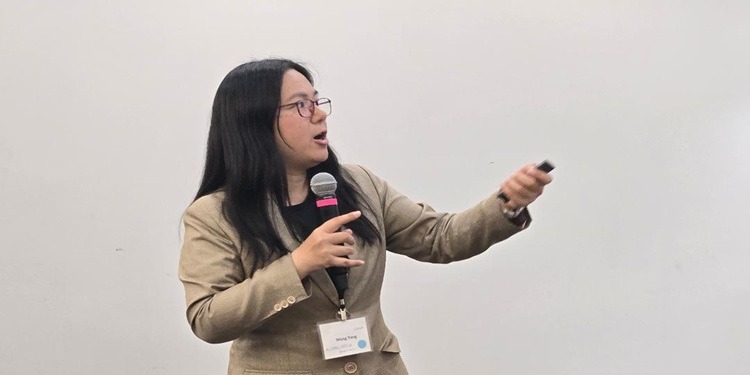
One of the conference’s most compelling presentations came from Meng Yang, a scholar of contemporary antisemitism and Sino-Jewish relations who teaches Jewish Civilization and Yiddish in China, and presented a talk titled When Antisemitism Is Legally Invisible, exploring the global dimensions of antisemitism.
Yang has carved out a unique niche in China’s academic landscape. She teaches the country’s first university-level Yiddish course and the country’s most influential Jewish civilization course and delivers lectures on the Holocaust and global antisemitism to packed classrooms. Her interest in Jewish culture has grown alongside global awareness of antisemitism, particularly following October 7, 2023. Yang is also the singer and co-writer of the first Chinese-Yiddish song and is a fellow of the London Centre for the Study of Contemporary Antisemitism.
In her presentation, Yang highlighted the unique legal and cultural context of antisemitism in China: Judaism is not among the five officially recognized religions in China. While China’s Criminal Law, Article 249, addresses ethnic hatred, it only applies to the country’s 56 officially recognized ethnic groups. As a result, antisemitism is legally invisible unless it poses a political threat. Yang emphasized the lack of comprehensive hate speech legislation and noted the role of intellectuals in shaping public attitudes toward Jewish people.
Yang shared insights from her classroom experience, demonstrating the stark contrast in student awareness before and after October 7. After screening the film on October 8th, which includes the sexual violence committed by Hamas, over two-thirds of students reported learning about these events for the first time, reflecting a significant gap in their information scope. Yang observed that discussions about Israel often trigger immediate student questions about Gaza, and a wave of antisemitic posts has appeared on online campus forums since October 7th.
While these are a few voices, they are very vocal. When Yang discusses the hostage crisis in Israel, students frequently ask, “Why don’t you speak more about what happened in Gaza?” Yang also observed heightened security measures after October 7, including police presence outside the Shanghai Jewish Refugee Museum and Chabad houses.
Beyond the classroom, Yang described the availability of products in China with antisemitic branding, such as “Adolph” shampoo and “shredded squid” snacks, as well as online euphemisms and references to Jewish people. She explained that intellectuals, particularly in the humanities and social sciences, frequently shape and perpetuate antisemitic narratives.
Yang also highlighted the global Chinese diaspora, noting that antisemitic comments often go unpunished, with only one exception. The demographic invisibility of Jews in China—combined with strict regulations and the absence of legal protections—contributes to a unique environment where antisemitism remains largely unregulated.
Her research underscores the crucial role of education and scholarship in addressing these gaps. “Unless antisemitism threatens the political order, it goes unaddressed.”
Looking Ahead
Yang’s presentation provided conference attendees with a rare glimpse into a largely overlooked facet of global antisemitism. By exploring the intersections of law, culture, and education, her work challenges audiences to reconsider assumptions about the universality of legal protections against hatred. It highlights the importance of international scholarship in combating Jew-hatred.
By Meyer Harroch | New York Jewish Travel Guide

Meyer Harroch is the Founder and Publisher of the New York Jewish Travel Guide, documenting Jewish heritage, life, and culture worldwide while promoting tourism and global destinations.